
Why test your business chatbot
A chatbot that doesn't know something doesn't stay quiet. It answers anyway, in the same confident tone it uses when it's right. From inside the business you never see that, because nobody on the team asks it anything.
The customer does ask. And if the answer suits them, they keep the screenshot.
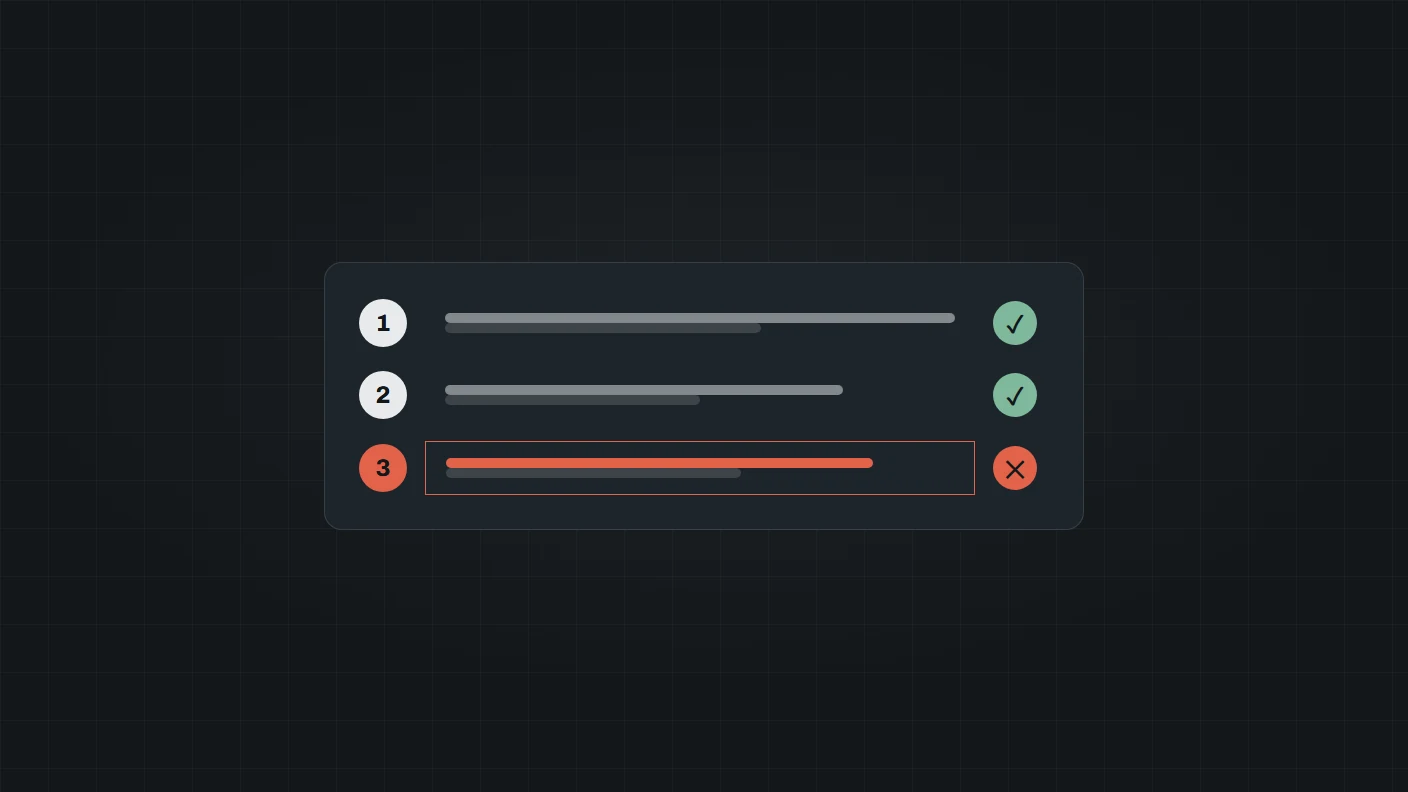
The three questions
Ask them from your phone, the way a customer would. It takes five minutes.
- A price you know by heart. The right answer is today's price, in the same currency and with the same conditions your website shows.
- Your hours on a holiday. The right answer is the hours for that day, not the usual ones. It is the detail that falls behind most often.
- Something you don't sell. The right answer is "we don't carry that" or "let me get you a person". Anything else is made up.
The third one is the one that matters. A chatbot that answers confidently about something your business doesn't have will, sooner or later, promise something you can't deliver.
What to do if your business chatbot fails one
Turn it off until it's fixed. A form that receives a message is worth more than a chatbot that invents an answer. The form needs testing too, though: fill it in yourself from your phone and see whether it arrives.
Then check where it gets its information. The most common failures have a short fix:
- Old prices. The chatbot reads a document nobody updated when the price list changed.
- One set of hours. It only knows the regular hours, not the holiday or seasonal ones.
- No way out to a person. It has no instruction for what to do when it doesn't know, so it fills the gap.
If your chatbot lives on WhatsApp, one more test
Write "I want to talk to a person" and time how long it takes to reach someone. On WhatsApp, customers expect an answer in minutes, not hours. And if your chatbot runs on the WhatsApp Business API, each reply can carry a per-message cost that depends on the country, so it pays to know how many conversations it resolves alone and how many it hands to a person. The same goes for any AI chatbot for small business: the bill follows the volume.
When a chatbot is worth what it costs
When the questions repeat, the answers are written down somewhere, and someone receives what the chatbot couldn't resolve. If one of the three is missing, you need something else.
If your customers always ask the same things and the answers fit on one page, a well-written FAQ section does the job with no model to pay for each month. It is the same logic as any AI automation in a small business: first check whether something simpler is enough.
How it gets tested before it talks to customers
With real cases, including the odd ones. The questions that really came in last month, not the ones you imagine. The misspelled question, the one that mixes two topics, the one from an upset customer.
That is what I do before I hand over an automation: it gets tested with your material, and what doesn't pass doesn't ship. And it is written down what it answers, what it doesn't, and who gets the rest.
If your business chatbot is already running, start with the three questions. If all three come out right, you don't need to pay anyone. If one fails and you can't tell why, send me which one.